

You could literally blindfold yourself, grab a dart, and toss it at a corkboard containing a list of albums from the legendary Bruce Springsteen and come up with an “essential album.” The biggest issue with the man who became known as “The Boss” is which one do you go with? Do you go with the youthful troubadour who tried to cram all the words he could into a song? Or do you go with the stadium-rocking, anthem-making monolith that conquered the Eighties? Do you go with his work with the ever-faithful E Street Band or with his solo work?
For all those questions, the answer is an easy one for me. All you have to do is look back to 1982 and the massive curveball that he threw the world when he released the stark, moody, and melancholy Nebraska.
Let’s take the clock back another decade or so. In the beginning, Springsteen was just another long-haired guy traipsing around the boardwalk of Atlantic City, New Jersey, and hitting the Asbury Park nightclub The Stone Pony, trying to make his name in the game. He would get tremendously fortunate; Springsteen was discovered by another legend, the talent scout John Hammond, who quickly saw the potential in the youthful “Boss” and signed him to Columbia Records in 1972.
But it wasn’t an overnight success – far from it. Two albums of Springsteen’s ramblings of inner-city life and the hardscrabble desires of its youth to escape their surroundings, Greetings from Asbury Park, NJ, and The Wild, the Innocent, and the E Street Shuffle, failed to catch a spark with the listening public, and Springsteen was on the verge of being dropped by Columbia. Then lightning was caught in a bottle, and not a moment too soon.
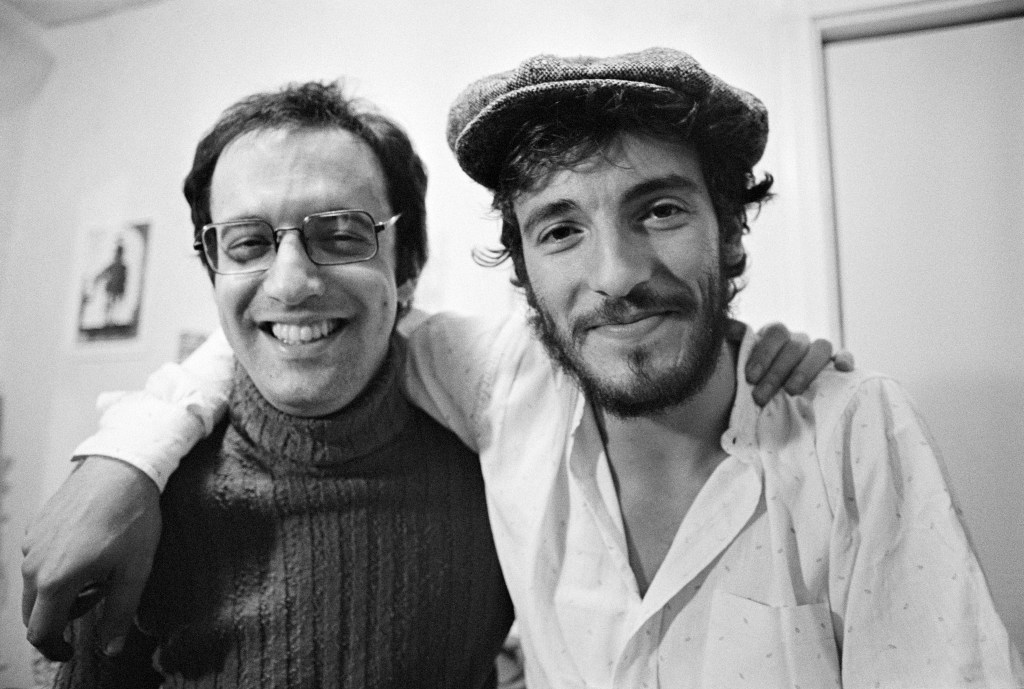
Noted Rolling Stone journalist/music critic Jon Landau caught Springsteen’s act in Cambridge, MA, in 1974 and penned the now famous “I have seen the future of rock and roll” quote that catapulted Springsteen into the limelight. Massive success followed that effort (and Landau’s joining forces with Springsteen as his producer and manager) with 1975’s Born to Run (the choice for many for Springsteen’s masterpiece) and, following a management dispute, the highly underrated Darkness on the Edge of Town.
In 1980, Springsteen would deliver another classic. The River was a two-album collection of characters and musical stylings that swept across the board. The resulting two-year tour in support of that record had the world talking about Springsteen and the E Streeters and wondering what would come next from them – what it would be is one of the biggest risks taken in rock history and, perhaps, one of its greatest rewards.
Sitting in his farmhouse in New Jersey that he used to “get away” from things, Springsteen began to ponder many things in his life. He looked back at his upbringing and the people that he knew in his younger days. During the tour for The River, Springsteen met the antiwar activist Ron Kovic (the author of the autobiographical Born on the Fourth of July), who introduced him to the men who served – and were forgotten – by a people who didn’t want to remember the cruelties of Vietnam. And he wondered about his future direction…what would he do with his newfound popularity?
Springsteen chose to do what he arguably does best – tell the stories of those who were downtrodden, for whom life seemed to have bypassed, who were just trying to do the best they could to get by in a cold, cold world. With only a four-track recorder, an acoustic guitar, a harmonica, and his voice, Springsteen would put together the entirety of Nebraska and even throw in some work on songs that would eventually wind up on what some might consider his best effort, Born in the U. S. A. It was Nebraska, however, that marked an artistic achievement that Springsteen has never again approached.

It is a brief ten-track album, but Nebraska delivers you into each and every story with an intimacy and strength that you are not expecting. The title track looks at the killer Charles Starkweather who, along with his girlfriend/lover Caril Ann Fugate, went on a shooting spree in the Fifties that eventually left ten people dead. In telling the story of Starkweather, Springsteen sought to rationalize, maybe even humanize, these two people and demonstrate that they could be any “American,” any person, and that it is a thin line between being a normal person and a deranged murderer.
The best track of Nebraska comes up with the second track, the mournful “Atlantic City.” In the song, Springsteen once again taps on the everyman, the person who tries to do the right thing in a city where the wrong thing seems to be rewarded. By the end of the track, the man’s only desire is that he and his significant other escape to Atlantic City to leave their woes behind with a job that will remove their problems.
Another remarkable track from the Nebraska album was the tune “Johnny 99.” It is another tune about someone who has tried to go about life the right way, only to get shit on by “The Man” and those in charge. In the case of “Johnny 99,” the titular character loses his job and, in a drunken rage, kills a man accidentally. The judge in the case refuses to hear about the extenuating circumstances that brought Johnny to his court, instead hammering him with a 99-year sentence for the murder.
This is the theme that courses through the veins of Nebraska – that there are good people out there, trying to do the right thing, but sometimes life and its inequities force them into decisions that they would not otherwise make. Through it all, Springsteen channels his inner Woody Guthrie, who became a legend for his anthems of the working man, and became the type of songwriter and performer who could deliver these individual stories in a manner that is simultaneously touching and somber, angering and inspiring.
Strangely enough, Nebraska almost didn’t exist as it eventually was released. Springsteen took the tracks that he had done in his Jersey farmhouse and tried it out with the entirety of the E Street Band in the Power Station in New York City. After several run-throughs of the songs, however, Springsteen came to the realization that the songs weren’t the “rock anthems” that he thought they could be – that they had more of an impact in their simplicity and intimacy of his acoustic work than a fully formed E Street Band effort.
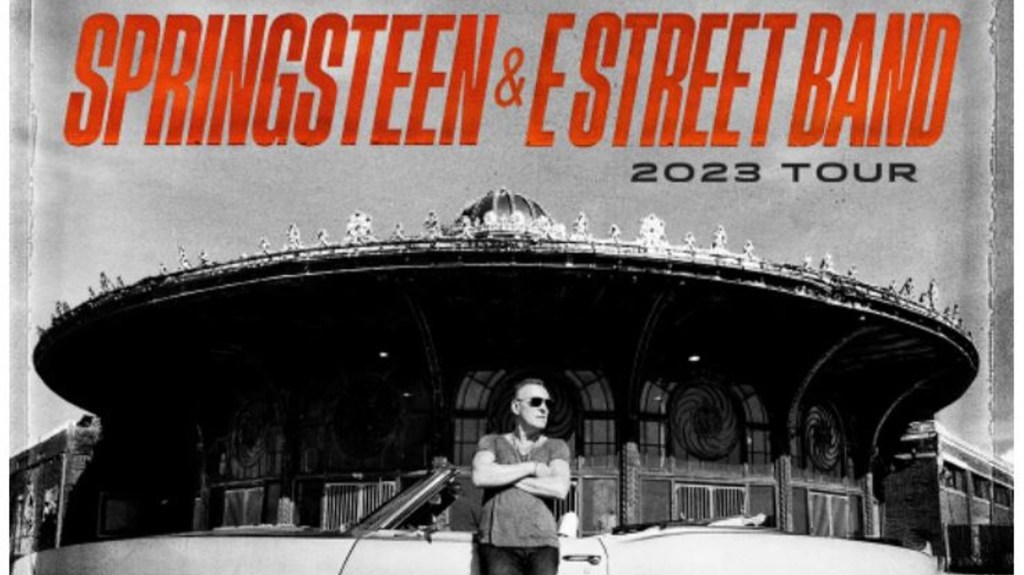
Bruce Springsteen, for more than fifty years, has become not only New Jersey’s favorite son but the States of America’s emotional and moral touchstone. He has been able to tell the stories of those who would have otherwise been left to rot in the wastebin of history (his fellow rocker, John Mellencamp, has done similar work throughout his career). Springsteen continues today with his exquisite storytelling and compelling characters, and it can be potentially traced back to Nebraska where he found a way to stretch beyond the boundaries of Freehold, NJ. That makes it the best of the records that Springsteen has ever released (perhaps not his best-selling, however) and one of the 100 Essential Albums of All-Time.
Previous Essential Albums:
Boston, Boston (1976)
Queensrÿche, Operation: Mindcrime (1988)
Johnny Cash, Johnny Cash at Folsom Prison (1968)
The BusBoys, Minimum Wage Rock & Roll (1980)
Rockpile, Seconds of Pleasure (1980)
Metallica, …And Justice for All (1988)
Rick Wakeman, Journey to the Center of the Earth (1974)

 "Tampa" Earl...On-Air Performer for Real Rock Radio!