Artists That SHOULD Be in the Rock & Roll Hall of Fame Redux: The Fifties and Before

Five years ago, I penned a series of articles that examined the artists and bands that have yet to earn induction into the Rock & Roll Hall of Fame. As of the most recent Class of 2024, there are now 394 artists, bands, and industry personnel that have been inducted into the Hall. With this said, that does not mean that they have gotten ALL of the people who should, at the minimum, get some consideration for entry.
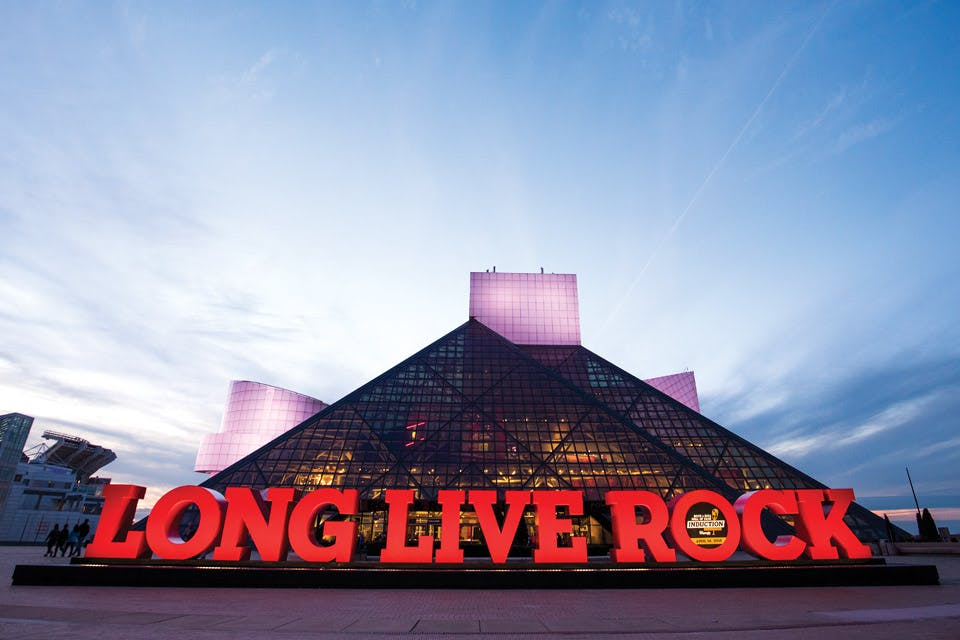
Why go back and do this again? In the last five years, many of those who were previously put on the “Should Be Inducted” list have actually been inducted into the Hall. Additionally, I stopped my series with the Eighties because, back in 2019, few artists from the Nineties were eligible. As we are approaching 2025, and with the “25 years removed” rule, we can now take a full look at the decade of the Nineties and see what they are missing.

You might think that, going back as far as the Fifties, we have tapped that vein out. “Big Mama” Thornton went in this year as a Musical Influence, and we’re going to go ahead and let up on the demand that Bob Wills and His Texas Playboys get a Performer induction. They were previously inducted under the Early (re: Musical) Influence category and, if we’re going to put in Jimmy Buffett, Judas Priest, and MC5 through this and the Musical Excellence categories and it is a full-fledged induction, then so be it. There are still some roots of the “rock and roll” tree that bear examination, however.

The “Crooners”

One of the problems with inducting Cher in 2024 is the fact that she is just a singer. She was not a musician, she did little (if any) songwriting – she basically walked into the studio, sang her part, and told everyone else to do the heavy lifting (can you tell I am not high on Cher’s induction?). If this is the standard that we are going to, then we’ve got to go back to the Fifties and before and put in those vocalists who have been overlooked because they weren’t “rock and roll.”

Does anyone spell out “rebellion” more than The Chairman of the Board, Frank Sinatra? Back in the Forties and Fifties, Ol’ Blue Eyes was a threat to the “squares” with his bawdy songs and boozing in Vegas. Although he made some disparaging comments about “rock and roll,” he did epitomize that spirit of rebellion that permeates the community.

There are plenty of others who can be considered in this same vein. Tony Bennett, Dean Martin, Neil Sedaka, Johnny Mathis, Patsy Cline, Barbra Streisand, Celine Dion, Harry Connick, Jr., Michael Bublé…the list gets extremely long, to the point where you must figure out where to draw the line and preserve the quality of the work as being the major reason for induction rather than charts or record sales. If Nat ‘King’ Cole can earn entry into the Hall, then why not some of the others in the “crooner” subset that predated and influenced “rock and roll’s” creation?

Dick Dale

Five years ago when I put this list together, I thought that Dale would be one of the first ones off the list. People love the guitar, as evidenced by Ozzy Osbourne’s hired guitar slinger Randy Rhoads being inducted through the Musical Excellence pathway in 2023, and you quite honestly cannot have a rockin’ song without having a guitar virtuoso wield it like a battleaxe. But here we are…five years after this original list, and Dale is still waiting for his rightful place in the Hall.

If you are a fan of “surf guitar,” then Dale was the man to whom you should pay homage. Along with Duane Eddy (inducted into the Hall in 1994…let me say that again…1994!), the duo were the practitioners of that style of music. They both laid the groundwork for vocal groups like The Beach Boys, Jan & Dean, and a myriad of other “beach bands” to earn success in the early- to mid-Sixties. Why does the Hall have one of these men in and not the other? There are plenty of mysteries as to why the Hall does things the way they do, but this question is extremely puzzling.

John Coltrane

The Hall has established that “rock and roll” is not just about the RAWK sound, that which came out in the late Sixties and many think ended on or about 1979 (the “classic rock” era). Different ingredients go into the gumbo that is “rock and roll” and one of those components is jazz. Epitomizing one of the great jazz legends is saxophonist John Coltrane, who is considered one of the immortals on the Mount Rushmore of the genre but hasn’t been enshrined in Cleveland.
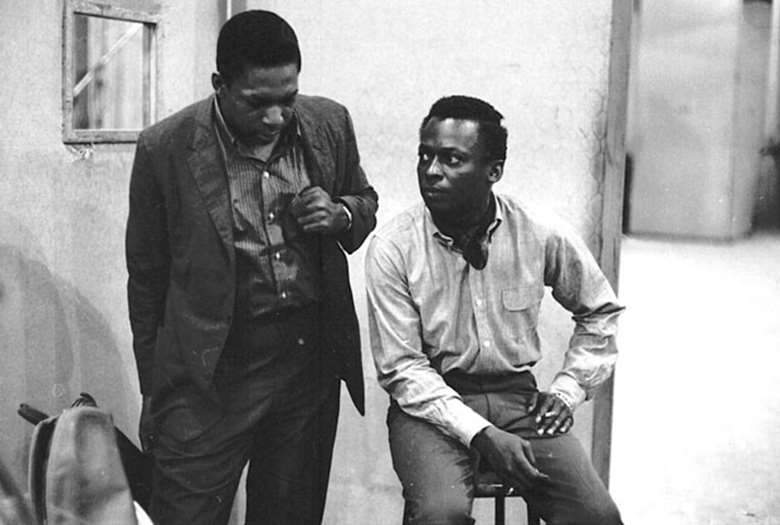
Coltrane more than held his own, even against another Hall member Miles Davis when both were in the New Miles Davis Quintet. The rest of his work is also quite remarkable, especially his early work with the Blue Note label and another partnership with another jazz legend, Duke Ellington. Once again, if you are going to have one, why not the other – if you are going to have Davis, why not Coltrane (you might also extend this question to Benny Goodman or Glenn Miller)?

One Thing That’s Been Tapped?

If you are wondering where the vocal groups of the Forties and Fifties are, you’re not going to find them here or, should I say, in the Hall. All the luminaries from that arena are already in the Hall and, if they have not been chosen by now, then they aren’t what are considered the foundations of “rock and roll.” Sure, you may have had a song that became iconic, or you may have had a fleeting period on the top of the charts, but in many of these cases, these artists and groups have become footnotes in history rather than those who actually made history.

Now that we have thoroughly exhausted the Fifties and before, we can move forth into the Sixties. It may appear that decade has been wrung out of all its greats, but there are a couple that are still waiting at the window that are deserving of a nod. If you start thinking about this, do remember…it is the Rock & Roll Hall of FAME, not the “Hall of Pretty Good!”

Renegades Radio Podcast -Beach Music Week from the Outer Banks!

TheBeachBoys

This week  on the Renegades Radio Podcast, we’re coming to you from the Outer Banks of North Carolina! And what better thing to do than to take a look at the history of beach music!

When you think of “beach music,” it’s more than just the Beach Boys, however. There’s almost a “East Coast/West Coast” thing to it – WAY before Tupac Shakur and the Notorious B.I.G.! Take a trip with us through some of the hits of beach music on this week’s edition of the Renegades Radio Podcast!

#dickdale #thebeachboys #beachmusic #thefourtops #thetemptations

Elton John & Bernie Taupin Tribute CDs “Revamp” & “Restoration” Evoke Different Responses

JohnAlbumCovers

Earlier this year, the legendary pianist, vocalist and performer Elton John announced that, after 50 years on the road as a musician, he would be retiring. There’s plenty of reason to believe John when he says this – he’s never even mentioned the idea of quitting prior to 2018 and seems quite happy performing (his residency in Las Vegas was one of the hottest seats in town). The announcement of his retirement disappointed many of his longtime fans and made interest in his concert tour for the remainder of 2018 more special that simply being able to see the virtuoso.

Along with his farewell tour, John has also been feted with not one but two new CDs from artists paying tribute to the songwriting of John and his studio partner, Bernie Taupin. This isn’t the first time that the duo has gotten this treatment; back in 1991, they were the subject of a tribute album called Two Rooms: Celebrating the Songs of Elton John & Bernie Taupin (the title of the CD reflected the fact that John and Taupin often worked separately on songs, with John coming up with the music and Taupin writing the lyrics in…two rooms). The record featured artists as diverse as The Who, Kate Bush, Oleta Adams, The Beach Boys, Wilson Phillips and Bruce Hornsby (his version of “Madman Across the Water” is nearly as good as the original) and their take on some of the classic music from John & Taupin.

JohnTaupin

With John calling an end to his touring days, it seems natural for another trip down memory lane and instead of one CD, fans get two. There’s a reason for this:  one CD, called Revamp, is filled with the top artists from the pop world and their renditions of popular John/Taupin tunes, and the other CD, called Restoration, features the best in current country music taking their shots at saluting John/Taupin. Surprisingly, it is the country side that wins out the “reimaging” (why not just “tribute”) battle between the two CDs.

Revamp kicks off with a snippet of John performing “Bennie and the Jets” before segueing into rapper Logic and P!nk joining forces for a rap/pop version of the tune. The twosome takes the classic song and make it their own, entertaining the listener and offering hopes that the remainder of the CD will be as adventurous. Unfortunately, that doesn’t come to be as pretty much every other song on the disc holds close to the original renditions.

Coldplay’s “We All Fall in Love Sometimes” falls flat, never even coming close to inspiring the listener, but Alessia Cara attempts to redeem that performance with a well-done version of “I Guess That’s Why They Call it the Blues.” Ed Sheeran turns “Candle in the Wind (2018)” into a folksy tune and Florence + the Machine hold serve with “Tiny Dancer.” Mumford & Sons (“Someone Saved My Life Tonight”) shows up for a so-so rendition before the top two performances take the CD.

Mary J. Blige demonstrates some very powerful vocals in tearing into “Sorry Seems to Be the Hardest Word” and really does make the song hers. By far the top song on the album is the collaboration between rapper Q-Tip and Demi Lovato, who take the classic tune John performed with Kiki Dee, “Don’t Go Breaking My Heart” and stand it on its head. Where the original tune was a piece of pop pablum, Q and Lovato turn it into a reggae/R&B mixed effort that comes off fabulously. Their approach wouldn’t have worked on any other song from the John/Taupin catalog, so it was outstanding that the right performers and song were matched up. Although Miley Cyrus (“Don’t Let the Sun Go Down on Me”) and Lady Gaga (“Your Song”) cover their respective tunes admirably, the Killers (“Mona Lisas and Mad Hatters”), Sam Smith (“Daniel”) and Queens of the Stone Age (“Goodbye Yellow Brick Road,” possibly the worst effort on the CD), come up short on their work.

Revamp is devoid of the artists taking their chances at recreating John/Taupin classics. For the most part, they stuck to the material and, while enjoyable, I’d rather see them stretch a bit and attempt something new. This doesn’t make Revamp bad, it’s just it pales in comparison to its companion disc.

LittleBigTown

Surprisingly, it is the country artists that take part in the tribute on Restoration that take the most chances in their interpretations of John & Taupin’s songs. From the start of the CD, with Little Big Town delivering a daring rendition of “Rocket Man,” the country artists seem to be more comfortable with deviating from the originals. The country artists also delve deeper into the John/Taupin catalog than the pop artists did.

Although there is a repeated song – Maren Morris’ OK version of “Mona Lisas and Mad Hatters” – and a repeated artist – Miley Cyrus shows up again to give a so-so performance of “The Bitch is Back” – the other artists take some chances with some deep cuts from the John/Taupin catalog. The Brothers Osborne deliver a stunning rocking version of “Take Me to the Pilot” and country legend Willie Nelson contributes a well-done version of “Border Song,” but other artists stretch their legs.

This isn’t to say they all hit the mark. Don Henley and Vince Gill give up an uninspired version of “Sacrifice” and Lee Ann Womack’s start slow/finish strong version of “Honky Cat” are a bit of a disappointment, but they are more than made up in such choices as Miranda Lambert (“My Father’s Gun”), Chris Stapleton (“I Want Love”) and Kacey Musgraves (“Roy Rogers”). Two duets bear special mention because of their uniqueness, the Rhonda Vincent/Dolly Parton collaboration on “Please” and Roseanne Cash and Emmylou Harris’ stirring rendition of “This Train Don’t Stop There Anymore.”

CashHarris

For its sheer daring and stylistic changes, Restoration comes out as the better CD than Revamp. It could have been for the fact that the pop singers weren’t as well versed in Elton John’s music or that they didn’t feel comfortable taking such songs and making them their “style.” It really seemed that the country artists understood John and Taupin’s works much better, displayed in the chances they took in song choices and the way they were performed. While you can’t go wrong with either one (nor the original Two Rooms…in fact, ownership of all three is well worth having in the catalog), it is clear to see that one is better than the other.